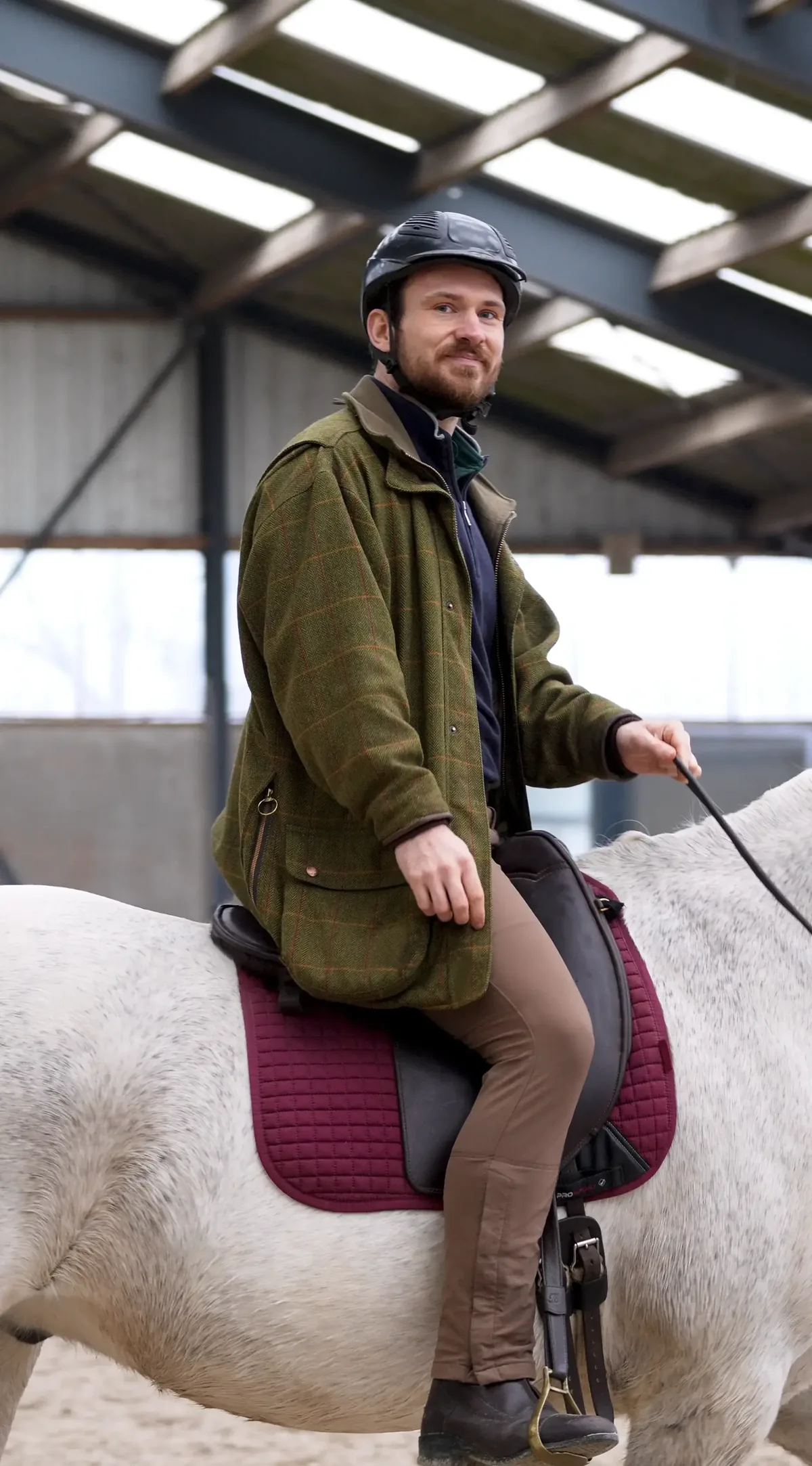
Why I train this way
I have changed a lot in how I think about horses.
For a long time my focus was on classical dressage. I spent years reading the riding manuals of the old masters, written between the 13th and the 19th century, and I keep a database of them that is free to use on this site. What inspired me were the exercises, lightness and invisible aids, but not the methods. So like most people I used the softest way to get to those goals I could.
Caloroso, my horse, did everything I asked, but over time I saw that he just was not enjoying it.
Why I stopped using reins
Switching to bitless riding helped for a while. But after some time I noticed that while it did improve, I still felt he was not completely happy. So I tried riding bridleless, and we both loved every moment of it. At that point I decided never to ride with reins again.
But that left me with a problem. I did not want to use pressure to teach the neckrope, so I needed another way to teach it.
I was wrong about positive reinforcement
To be honest, I was always sceptical about positive reinforcement. Like a lot of riders who were taught to work with pressure and release I held a lot of misconceptions.
But the moment I tried it I was convinced. I could teach things without pressure and Caloroso fully enjoyed training. It also worked much better than the pressure and release I was using before. It was the right fit for bridleless classical dressage.
How the horse feels
Every change I have made came from me wanting horses to feel better.
The most recent change came through working with problem behaviours and trauma in horses. I already had an academic background thanks to my master’s and PhD studies in psychology and neuroscience. During my research I discovered how much stress can impair learning. And after discovering and being a student at the Equine Behaviour Affiliation I realised how much those things really matter in horses.
All of it points the same way. Training on its own is not enough, especially when dealing with trauma. Every horse needs real choice in their life, and most of them have spent years being told what to do and corrected when it was wrong. In my work with horses I want to respect what they feel, rather than forcing my decisions on them.
What it means for your horse
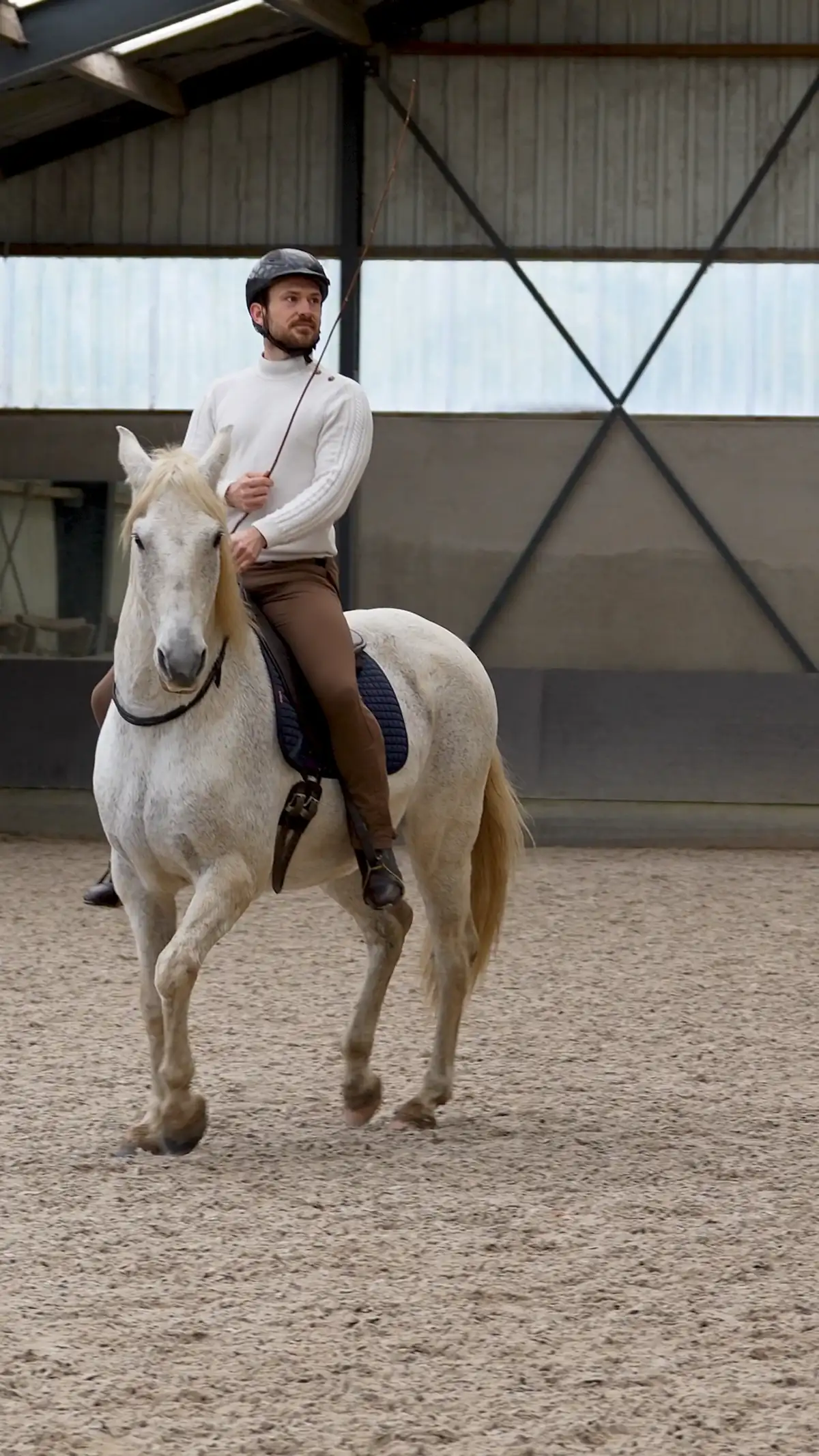
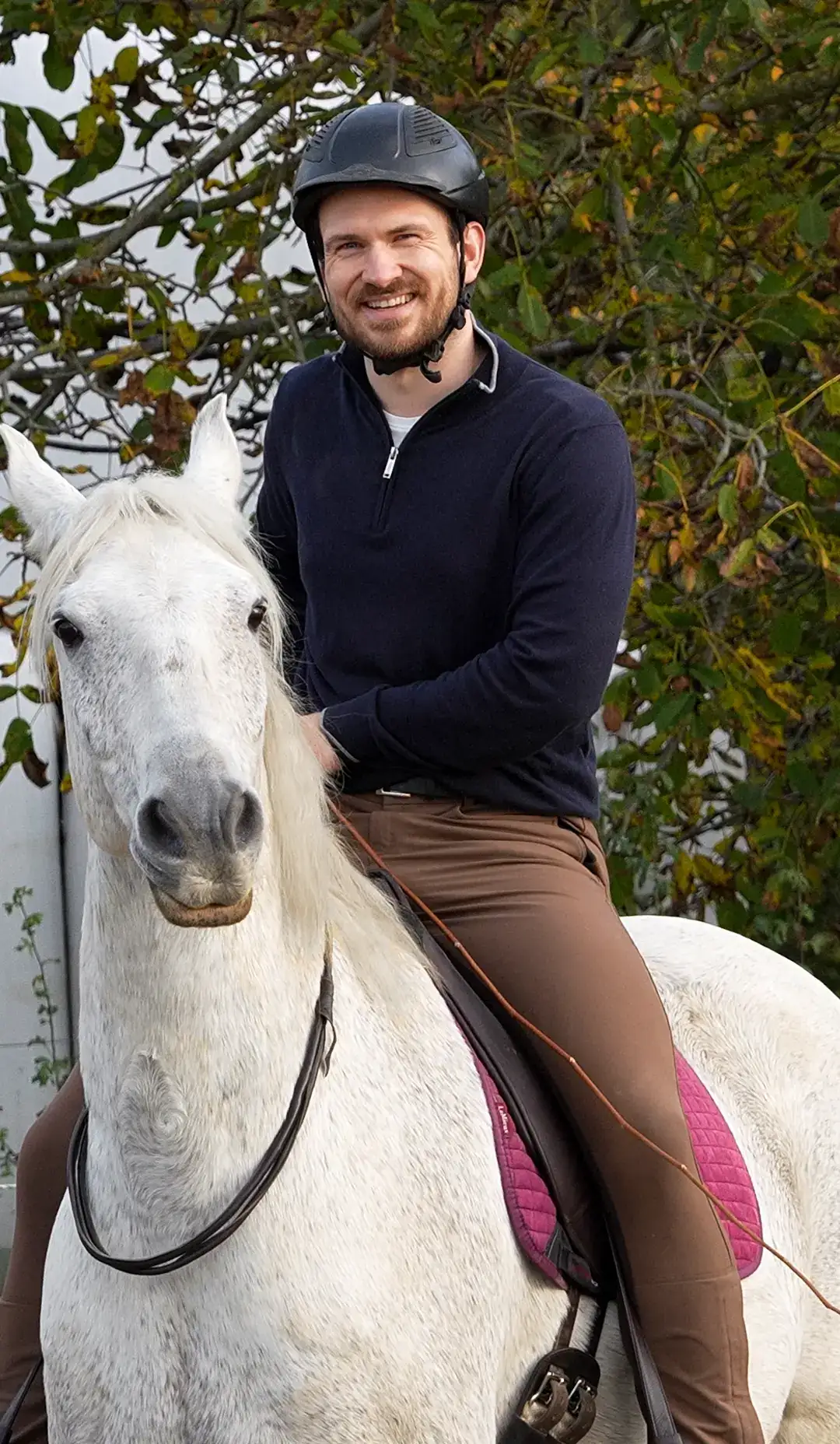
In my lessons the horse is always allowed to say no, and when that happens we stop and find out why. Choice is the most important thing we can add to training, also when using positive reinforcement. I teach communication signals, so the horse can tell us better how they feel. The aids stay light because they are taught rather than enforced, and the pressure never goes up.
If we see your horse needs to regain trust, we will use non-operant exercises and activities to make them feel better over time. Having a trusting and safe relationship between horse and human is a core pillar in my training philosophy.